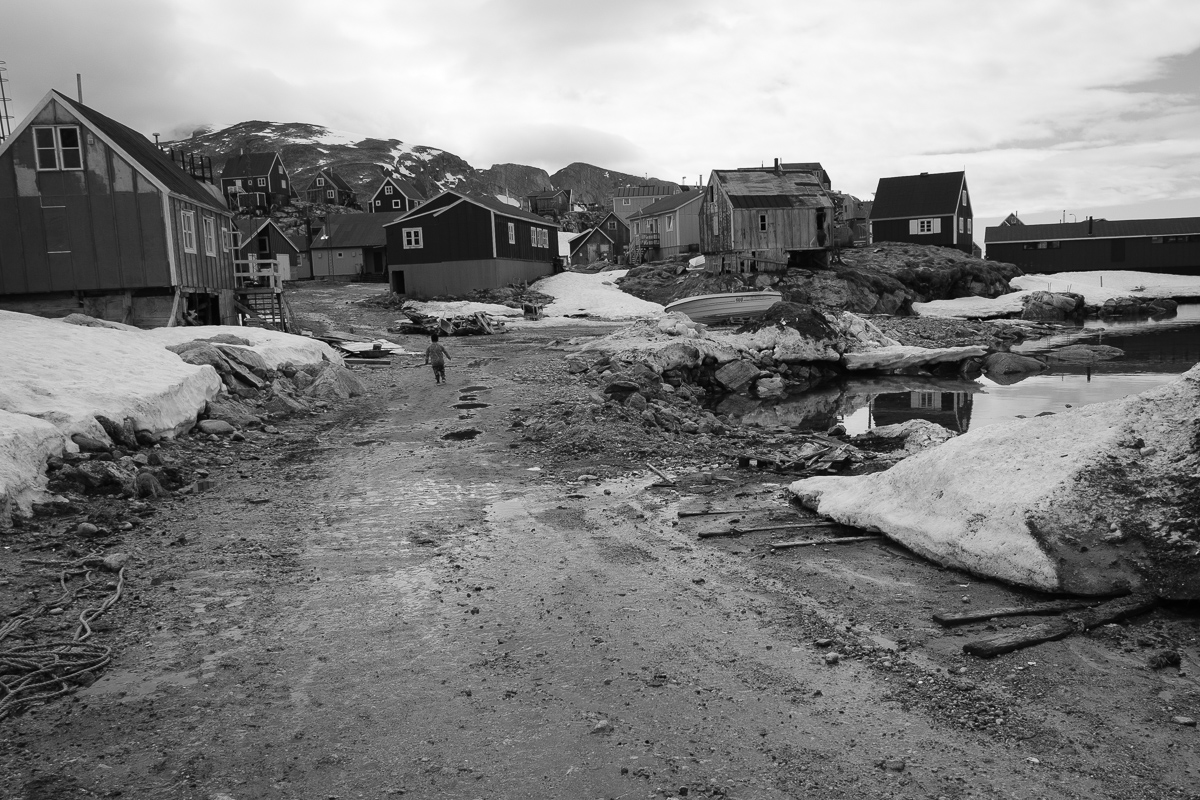
Angmagssalik is an island on the sparsely inhabited east coast of Greenland, a few km south of the polar circle. Most of the people, around 2000, live in Tasiilaq, the largest town, while another thousand more are scattered among the nearby villages of Kulusuk, Sermiligaaq, Kuummiit, Tiniteqilaaq and Isortoq. Historically the area has been very isolated and even nowadays it feels — in the words of locals — 15 years “behind” the centres on the west coast, a lot of time in the rapidly changing Greenland. Fjords are sometimes blocked by ice up until July and flying is the only way in and out. The polar stream, a current flowing south from the Arctic transporting pieces of arctic pack and icebergs, makes the mainland complicated to reach in summer and impossible in winter. The government lifeline ship, an ice-strengthened cargo, only runs May to November. In winter, only flights supply the supermarkets.
The Greenlandic society is traversing an era of rapid change and, because of its isolation, the effects of these changes are more evident on this coast. Liquidating Greenland’s problems with rapid “modernisation”, isolation and winter darkness is simplistic and, as it is often the case, reality is more complex than that. The following lines are just the result of my readings and personal observation over a limited amount of time and should not be regarded as Truths. Talking to locals, a sense of bewilderment, emptiness and lack of perspectives is evident. For those who have the opportunity and are strong enough, both physically and mentally, to become fishermen and hunters, the environment provides endless opportunities for self realisation. Rarely I have witnessed a happier person than Simujok when he shared he would go narwal hunting with his kayak in the Nansen fjord the following weeks. The same goes for those who have the opportunity to study, speak fluent Danish and English, go abroad and decide to come back because here, amid the nature, they feel at home. For all others of lesser means, both inner and outer, life can become a limbo. Familiar bonds are very strong and leaving home is too hard for many. Several do not have a stable job but jump between opportunities. Housing and food, especially in winter, can be extremely costly for the local salaries. Traveling is extremely expensive (consider an average 800€ return to the west coast or to Iceland) and make many feel locked-up here. The most evident symptom is the large consumption of alcohol, beer and wine as the rest is not sold in East Greenland, which is mostly evident at weekends. Extended families and friends gather on the hills around town on Friday afternoon and keep on drinking until Saturday evening, or until they pass away. The whole “process” repeats weekend after weekend and resembles a gentle falling asleep and is an experience to share with the rest of the family. Other symptoms such as domestic violence and compulsive gaming and gambling are equally frightening but harder to spot. As is drinking alone at home. Suicides are extremely common, at least compared to Europe. Almost every person I spoke to lost a friend, a sibling or a colleague. No real public support exists. Tasiilaq’s municipality’s only recovery programme starts only upon request and involves experts flying over from Nuuk, Greenland’s capital city. In one of the villages, Sermiligaaq, a great deal of work in this sense has been done by Robert Peroni. By going family to family repeating what of their beloved traditional life will be lost if they start drinking, the community decided to have it removed from the local supermarket. The need for psychologists is evident, but there is only one in the whole district, available 2h a week and doesn’t speak greenlandic, thus needing a translator. The underlying issue here is the lack of a clear path forward. After secondary school and — more often in villages — sometimes even sooner, many young people feel abandoned, helpless and stuck between traditional family values and what they perceive as “modernity”. It is not all negative obviously and it is extremely interesting how a few manage to find their way, even after years of “waiting”, like Kasper, who decided to start studying to become priest to be a guide for his community.
This series, the result of a few weeks spent in the area living in people’s homes whenever possible, I tried to capture both highs and lows, strengths and weaknesses of this place and its inhabitants.
Tasiilaq, July 2022.
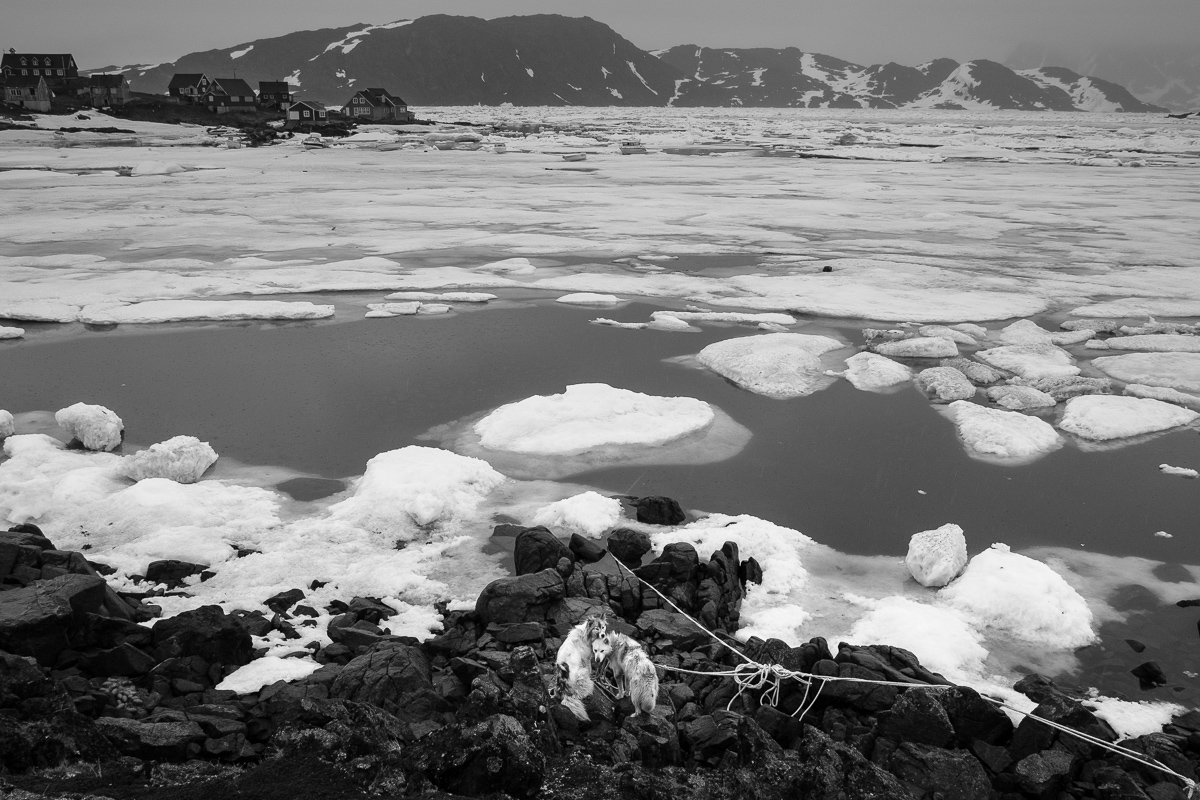
Sled dogs in front of the harbour in Kulusuk.
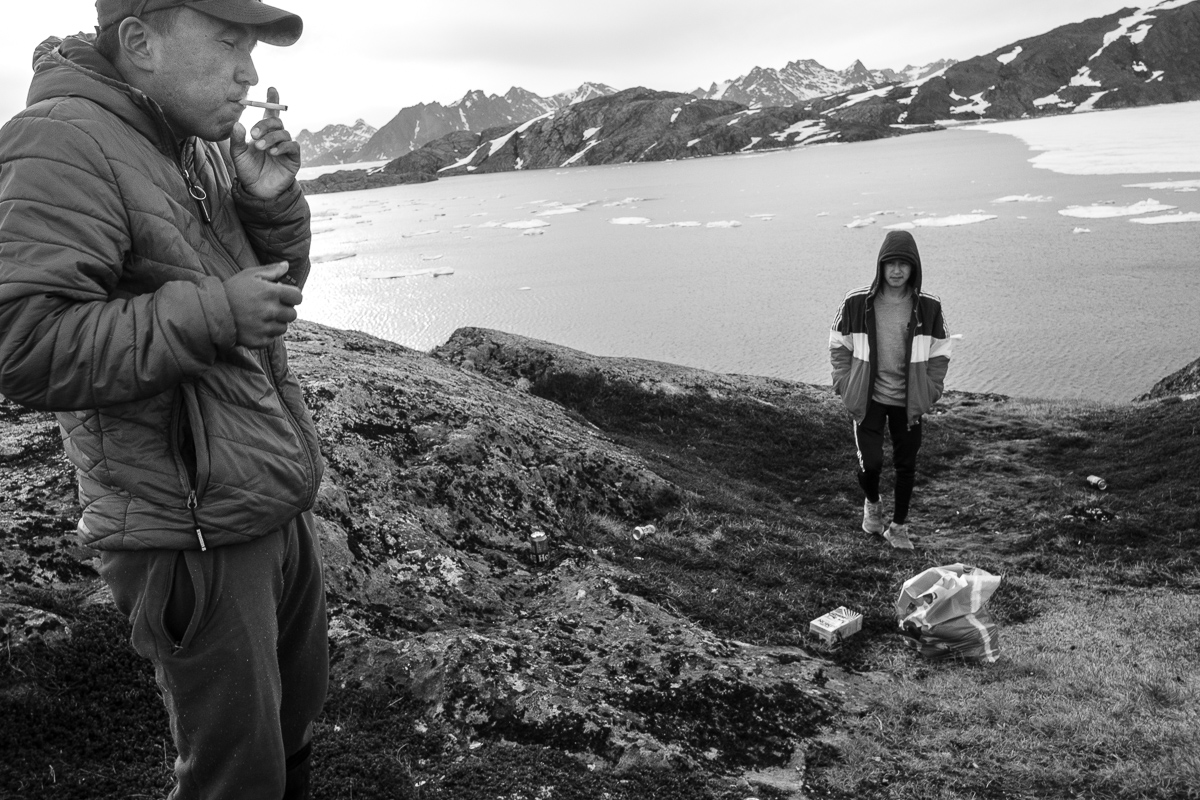
Almost every evening Matthias (on the left) goes having a beer on the hill above the village of Kulusuk. Alone or with friends does not really matter, what he likes is the “peaceful” feeling of contemplating the nature. He has a job at the airport but what really interests him is hunting. He cannot stop talking about his father and grandfather, both hunters, and where the strongest hunters in the district live. Life can be extremely lonely, friends left and one commited suicide last year, he said it as it were a normal event of life. He does not want to leave though, to leave this “peaceful” nature.
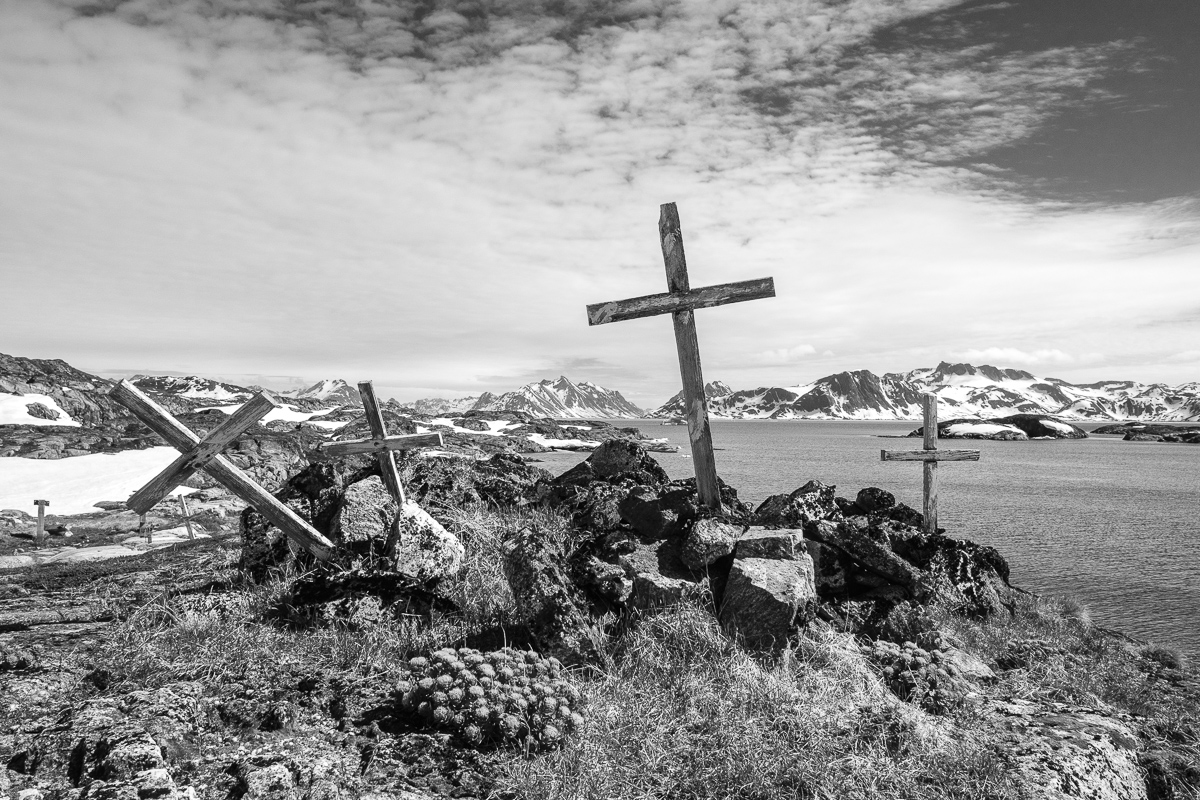
Graveyard on Qernertivartivit, a now uninhabited island in the Angmagssalik fjord. It is one of the many settlements where no-one lives permanently anymore.
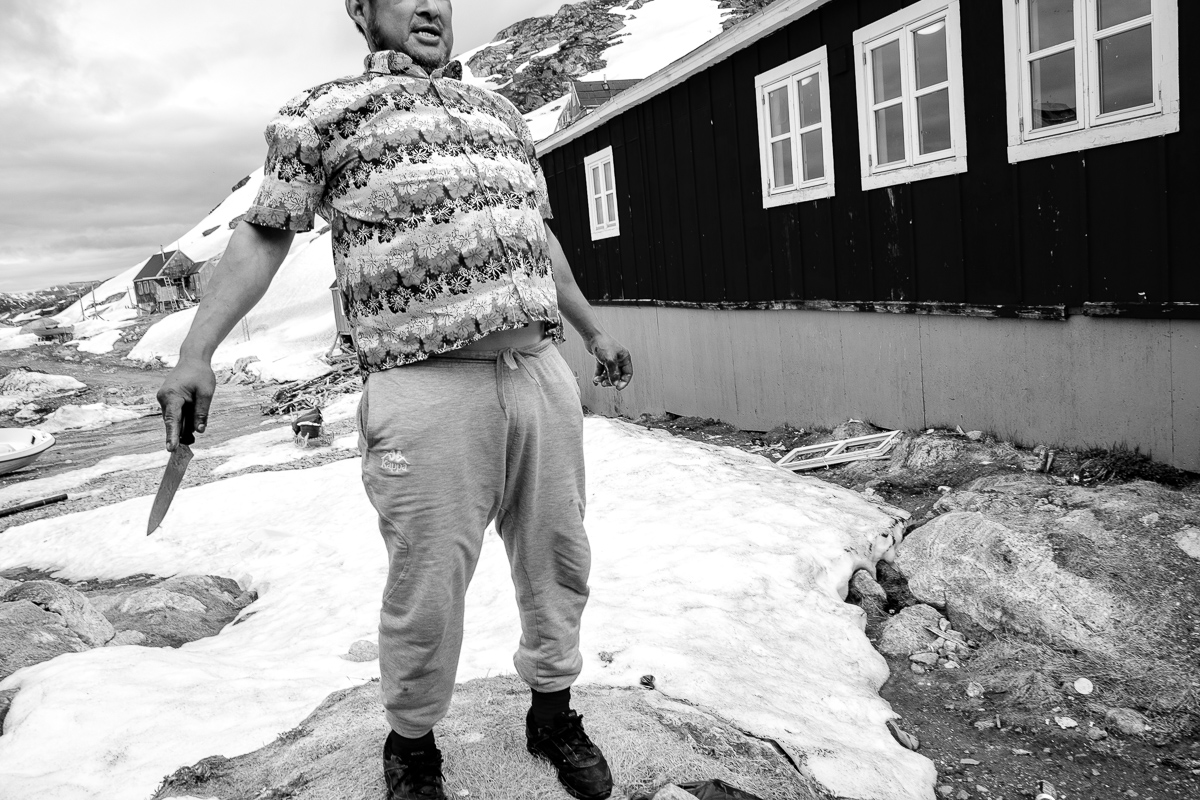
Hunter butchering a seal in preparation for the national day — “Ullortuneq”, meaning the longest day, on 21 June — feast in Sermiligaaq.
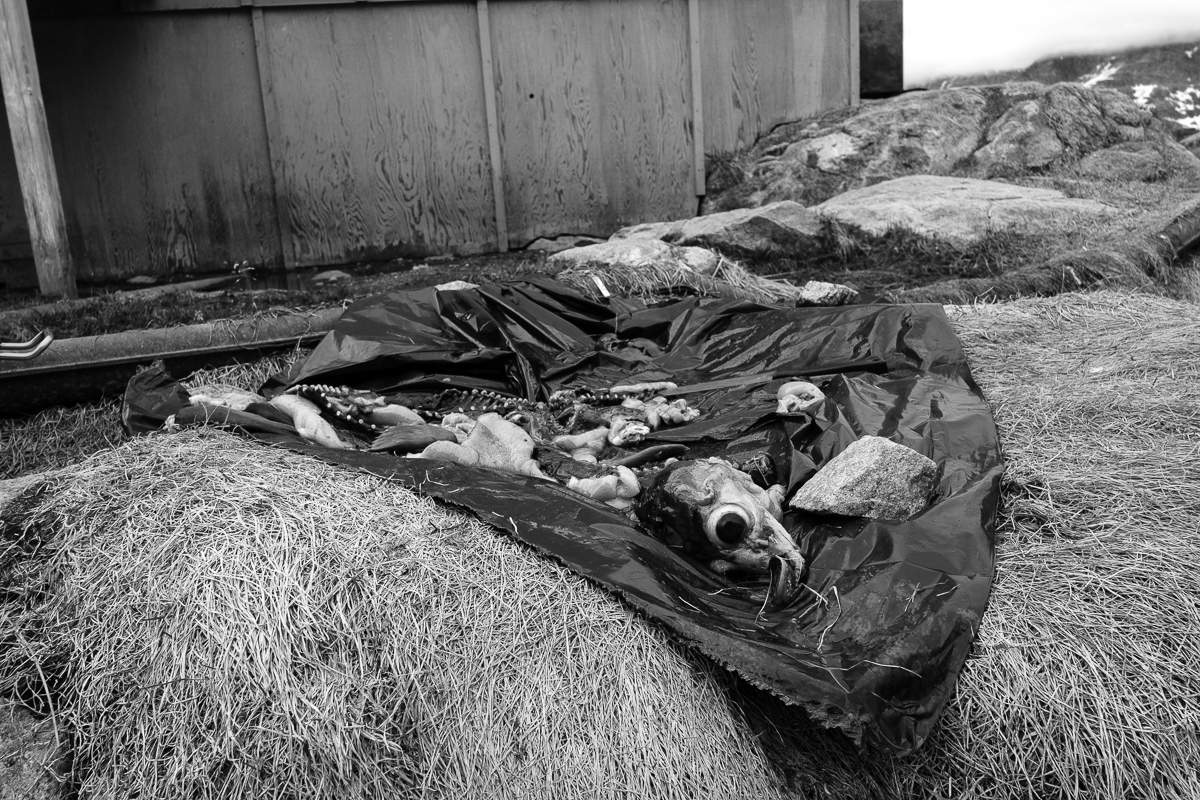
What remains of a seal. Seals used to be the main source of food and leather for Greenlanders up until a few decades ago and are still widely hunted for their meat.
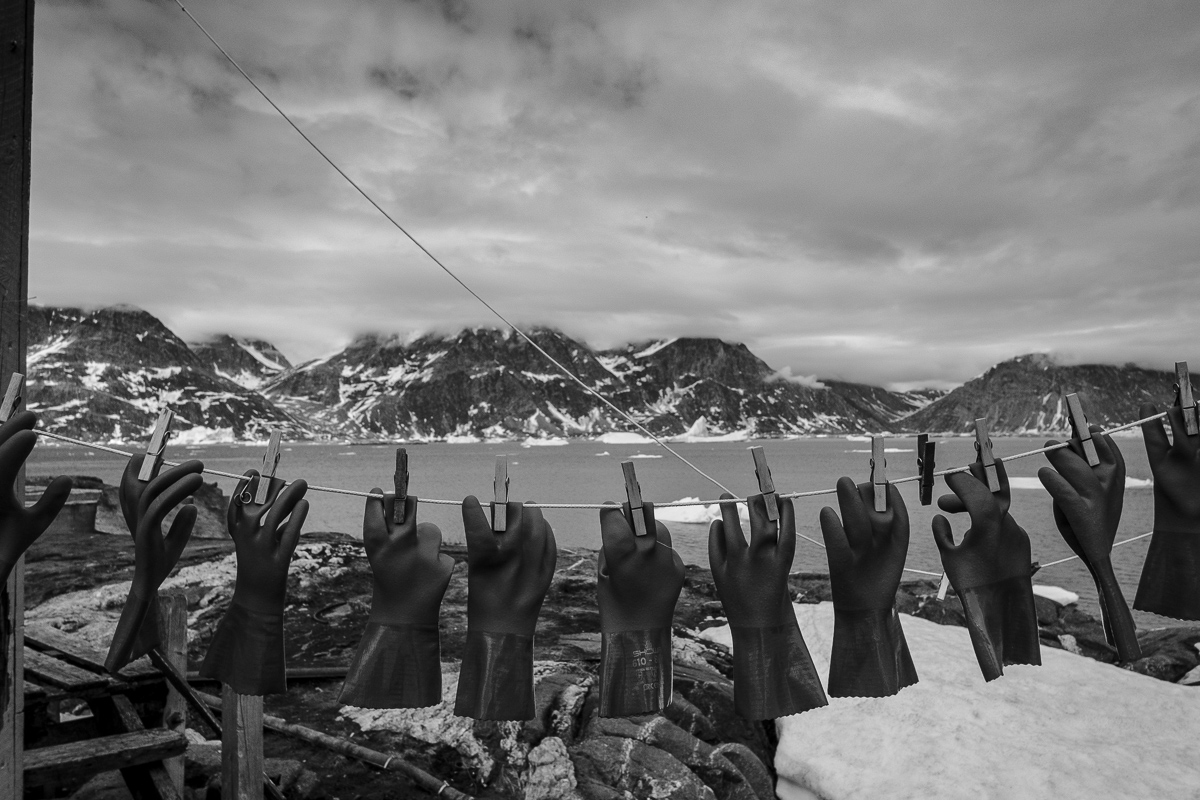
Fishermen’s gloves in Sermiligaaq.
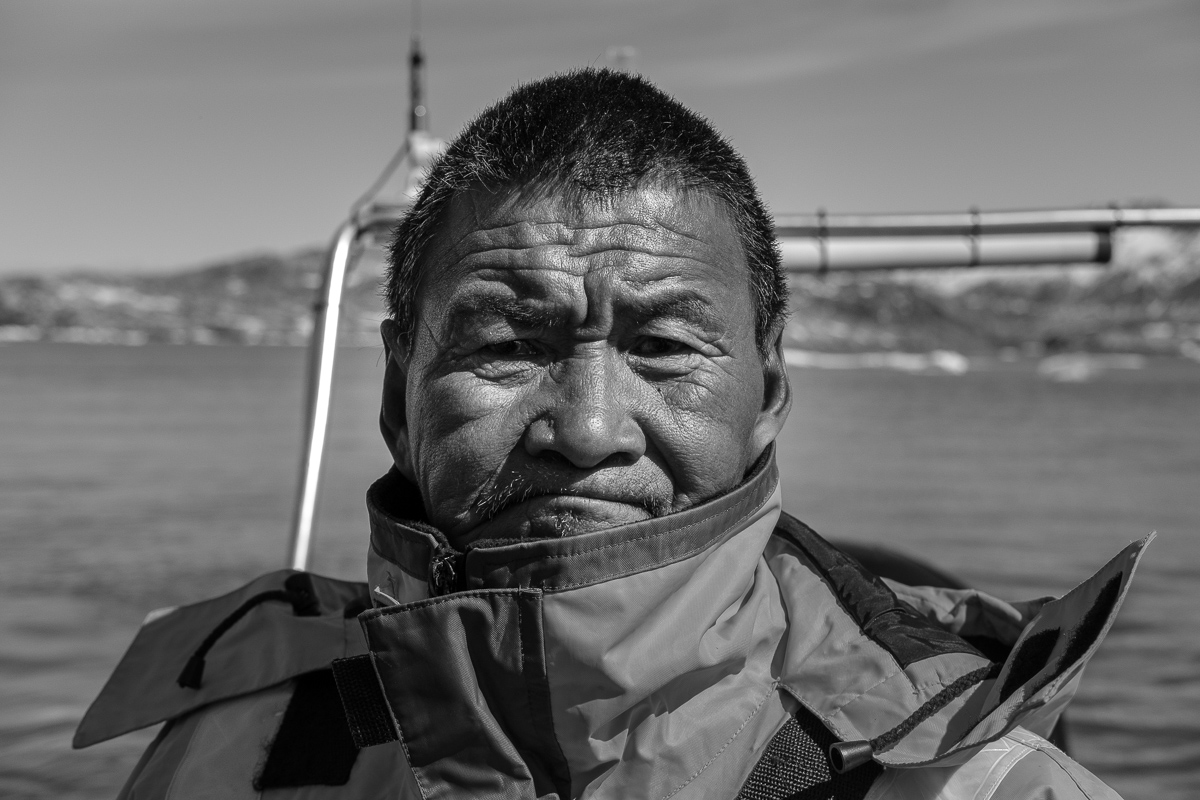
Harald, fisherman and hunter, Tasiilaq.
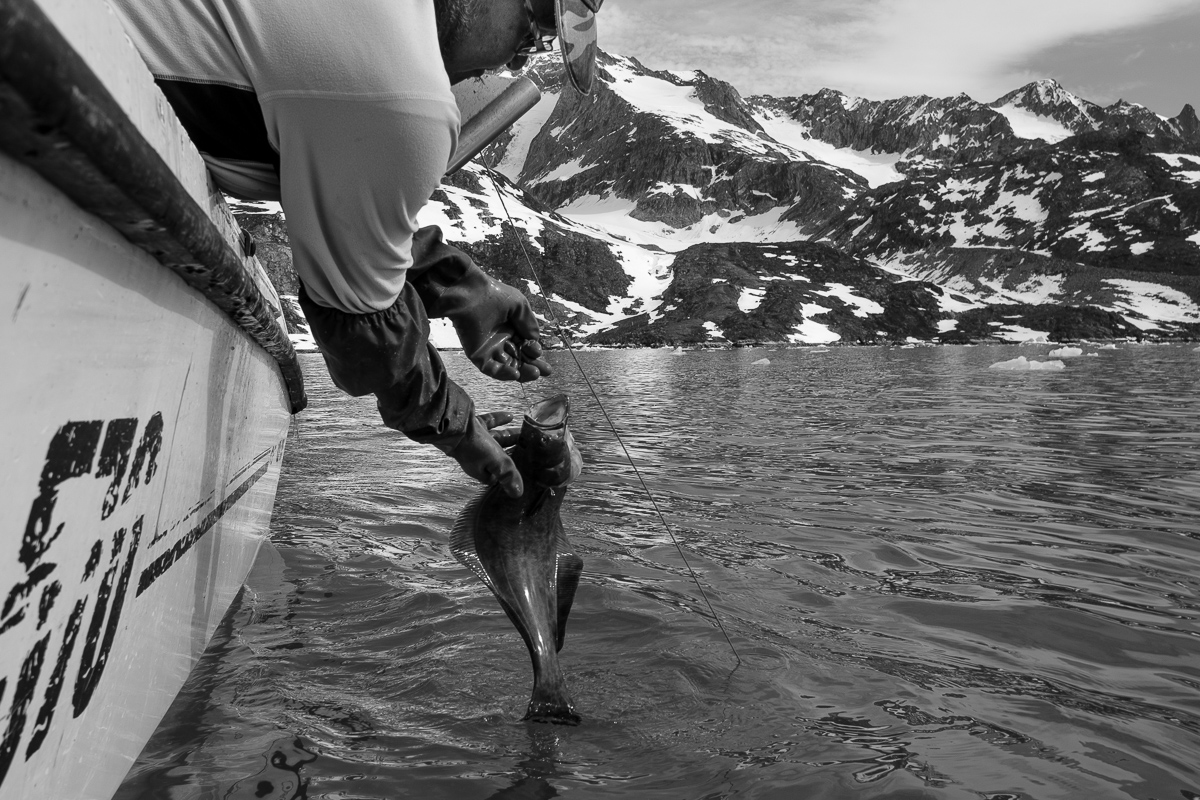
Simujok fishing halibut with a trawl line in front of the Knud Rasmussen glacier. What is not eaten by the family is sold to the fish processing plant in Kuummiit.
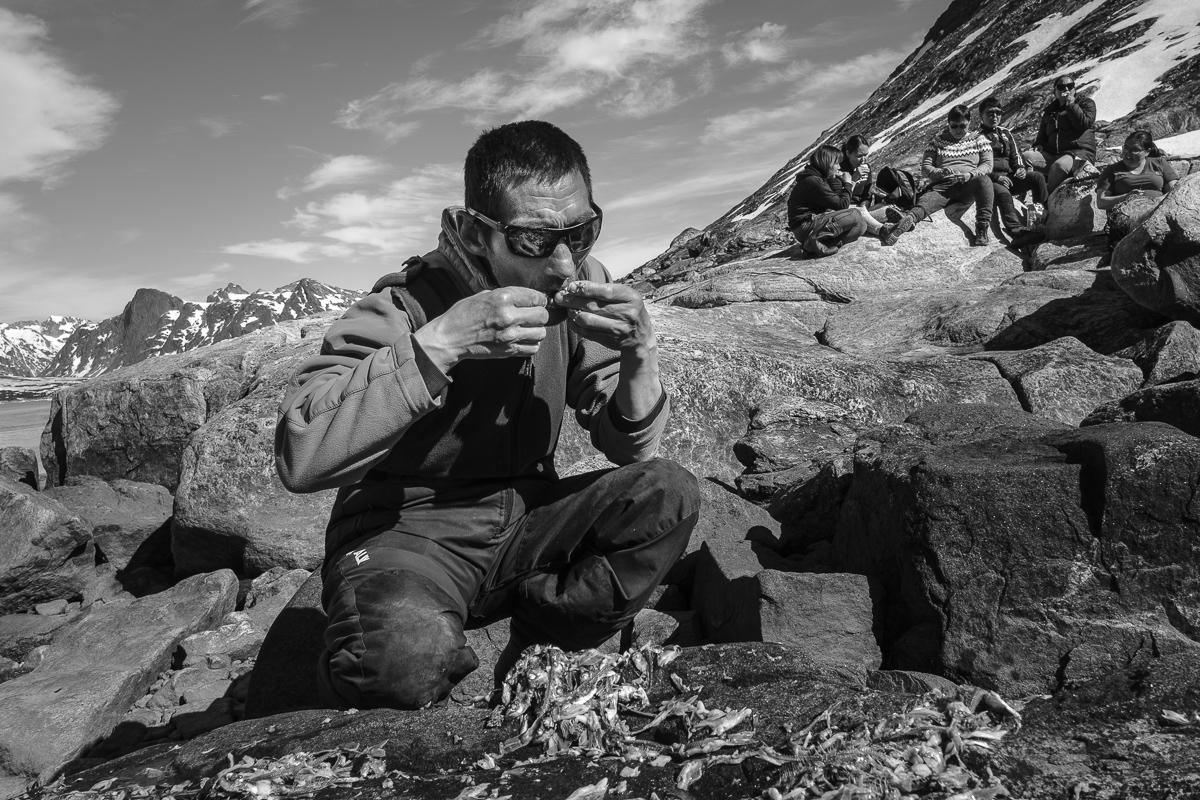
Sunday picnic with bolied ammasset, the fish that gives the name to the island of Angmagssalik.
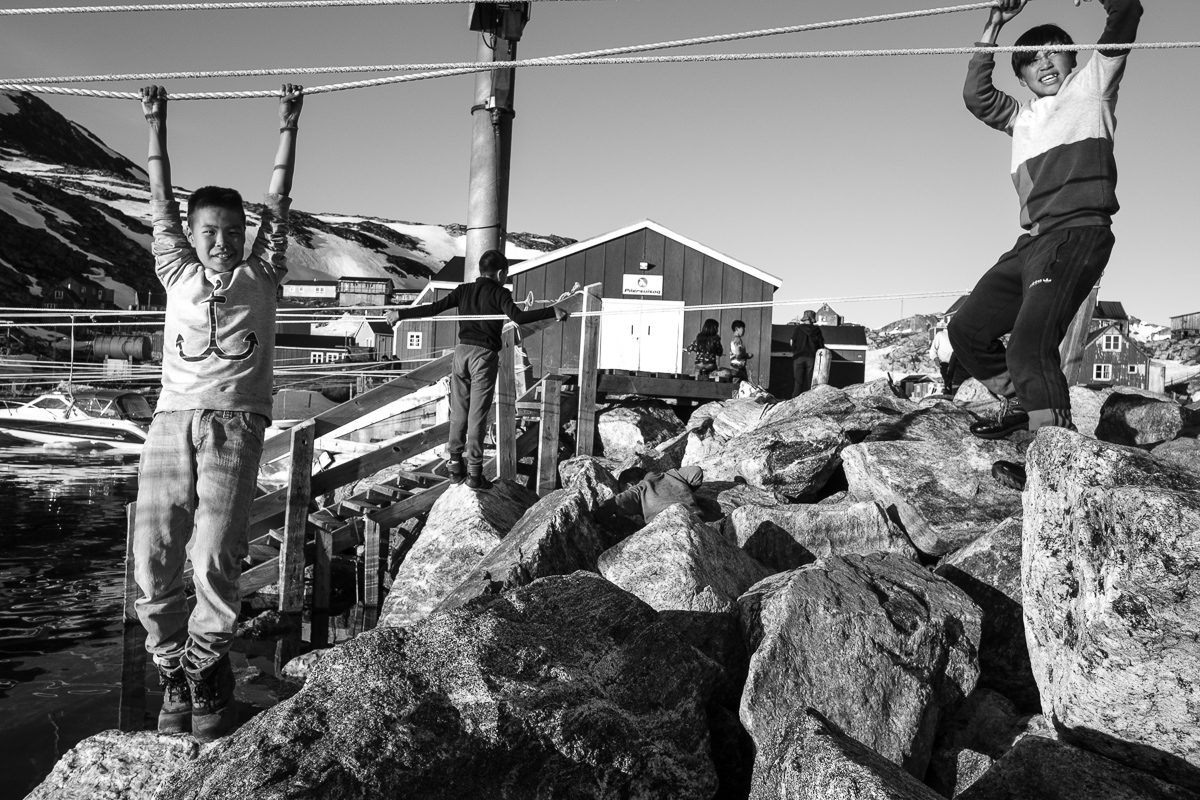
Kids playing at harbour of Sermiligaaq. The ropes are used to berth the fishing boats.
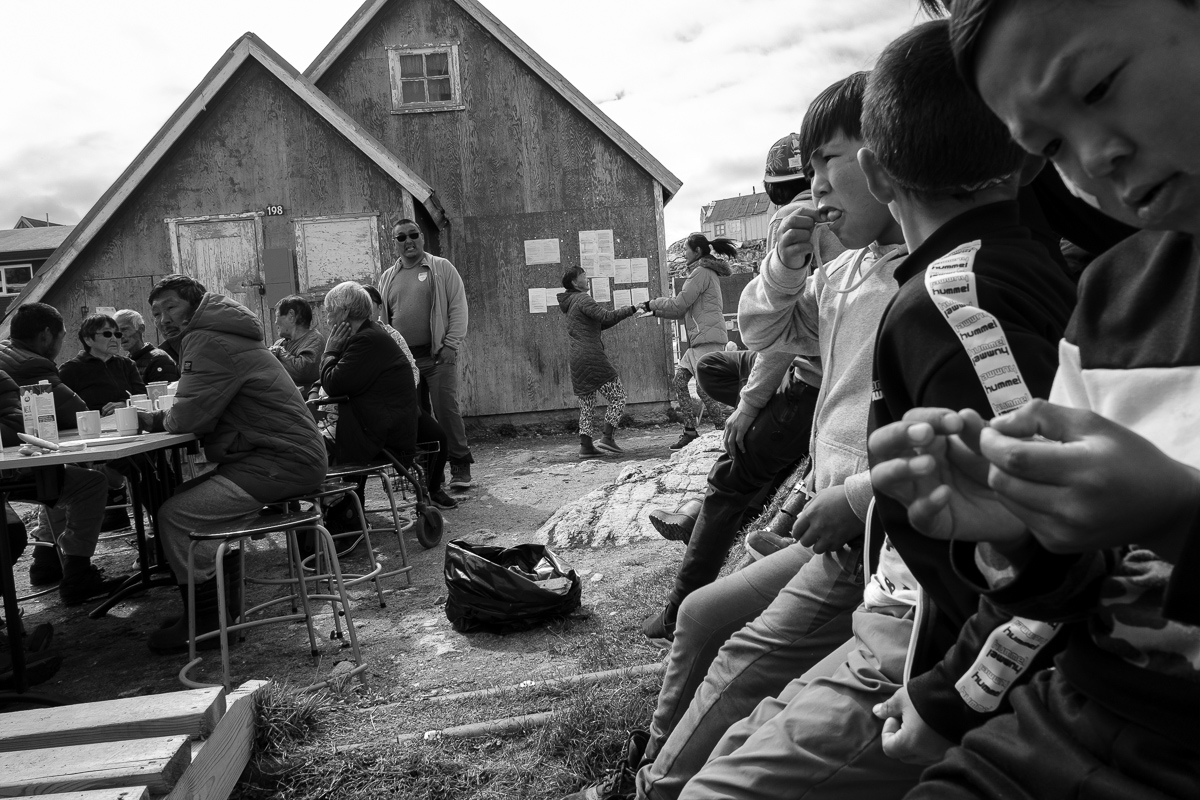
Celebrations for the national day – “Ullortuneq”, meaning the longest day, on 21 June – in Sermiligaaq.
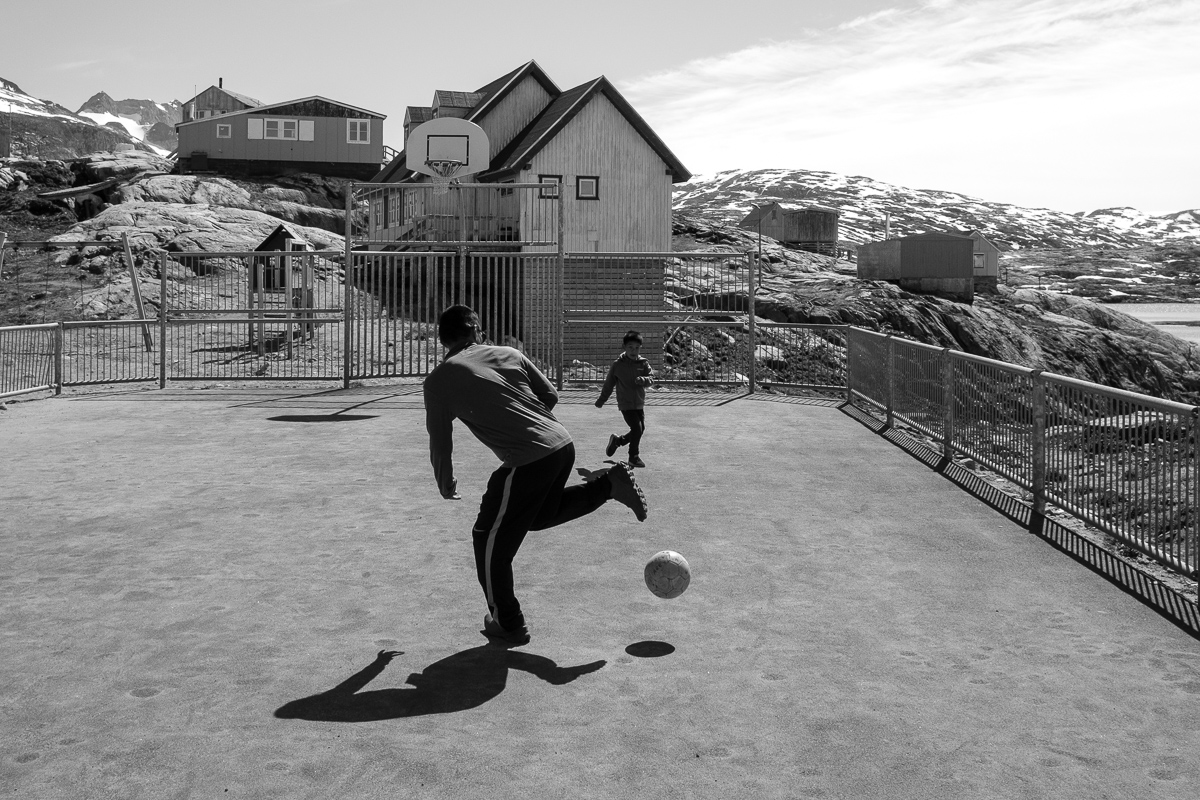
A dad playing with his kid. Football is extremely popular in Greenland and every village has its own small field, sometimes synthetic sometimes just concrete, like here in Tiniteqilaaq.
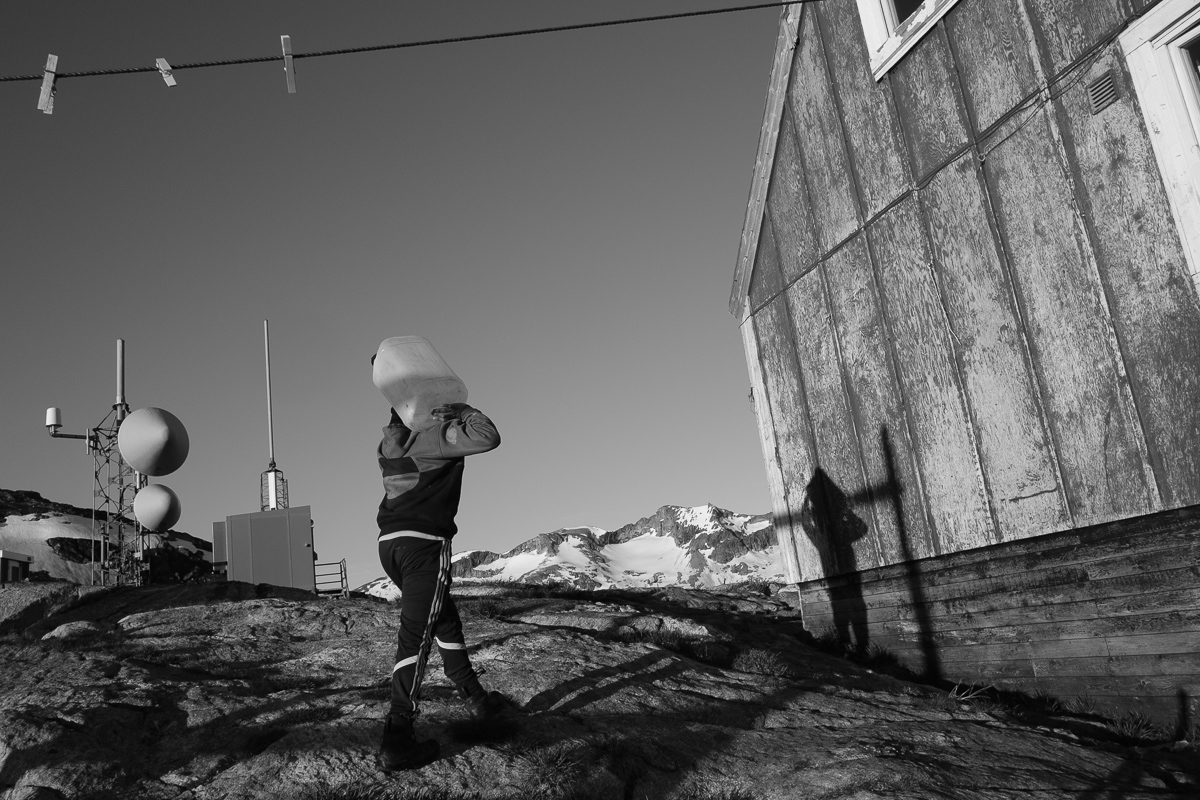
A young man fetching water from the village reservoir in Sermiligaaq. Very few houses in the district have running water: public buildings like the service house, that also provides showers for the community, and a few private houses where pumps have been installed.
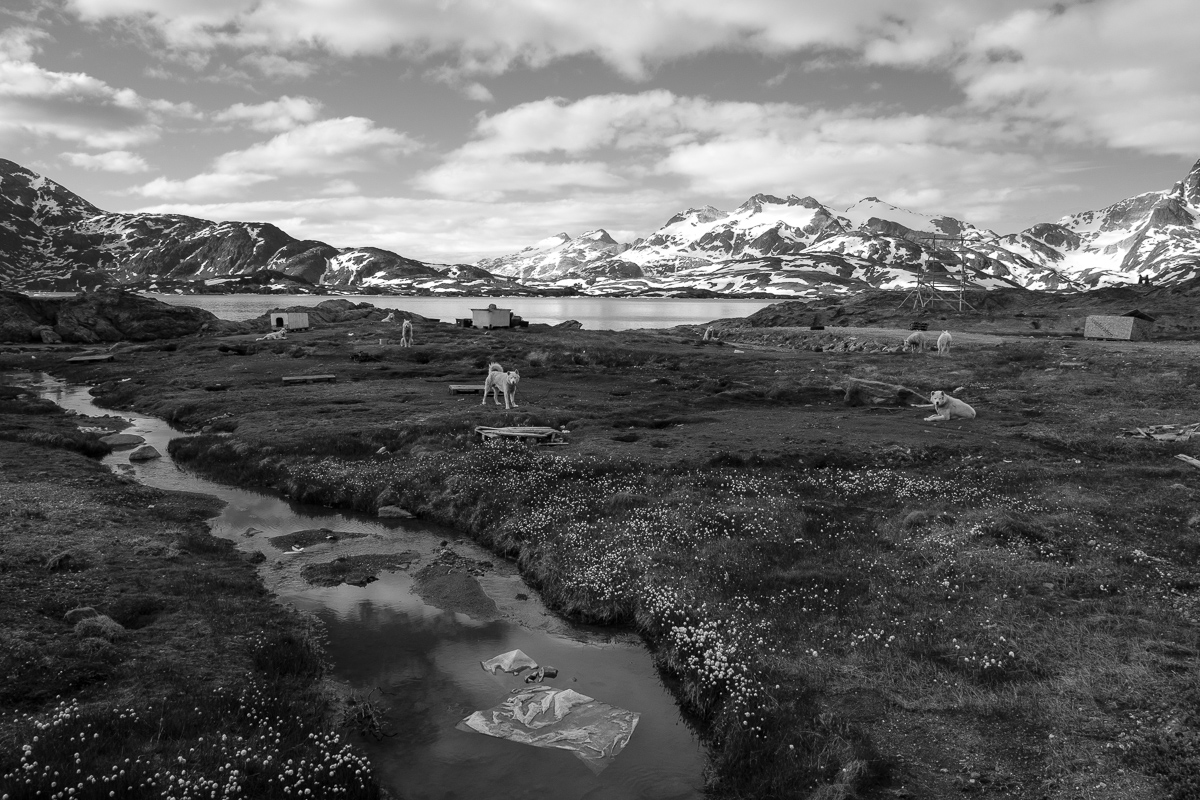
Sled dogs in the outskirt of Tasiilaq. Garbage, mostly cans and plastic, are a common sight.
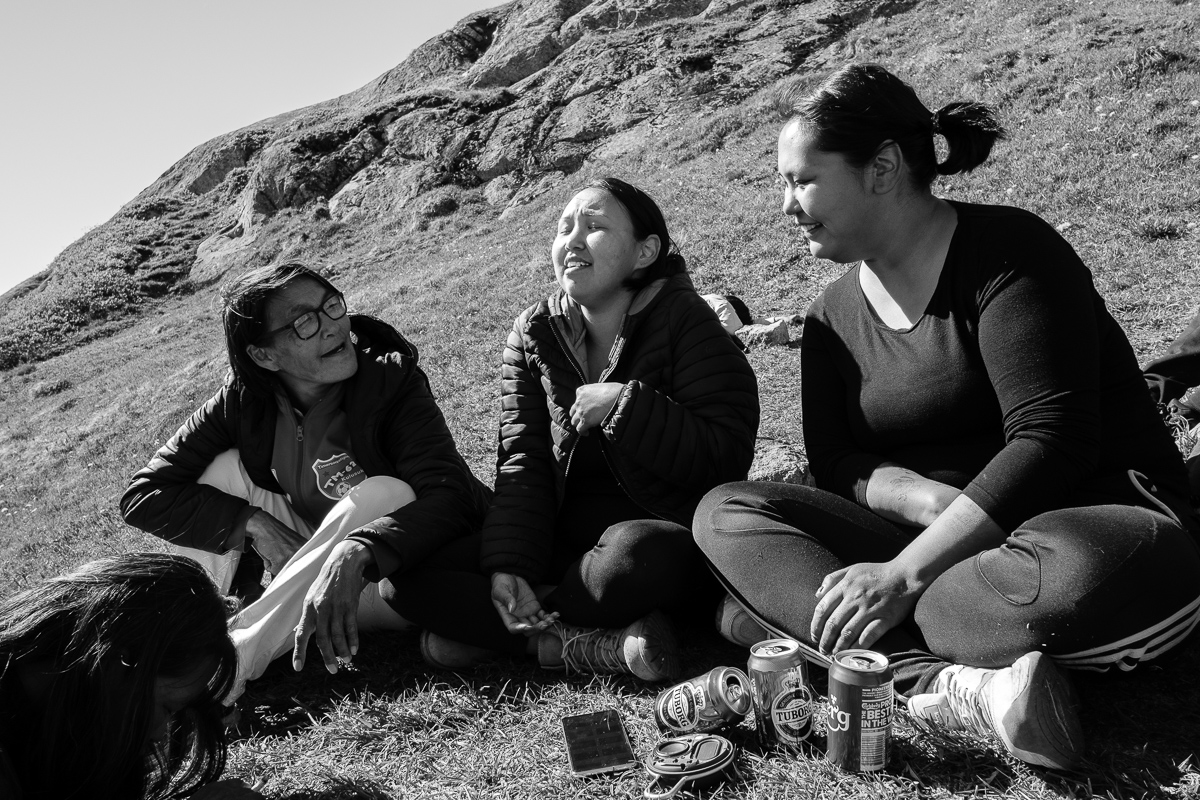
A weekend picnic. When the weather is good large groups start gathering on the hills around Tasiilaq on Friday afternoon and start eating, drinking and singing. Many keep on drinking until they pass away, only to restart on Saturday morning. The same story repeats weekend after weekend and resembles a gentle falling asleep and is an experience to share with the rest of the family. Familiar bonds are very strong in east Greenland and drinking together is common.
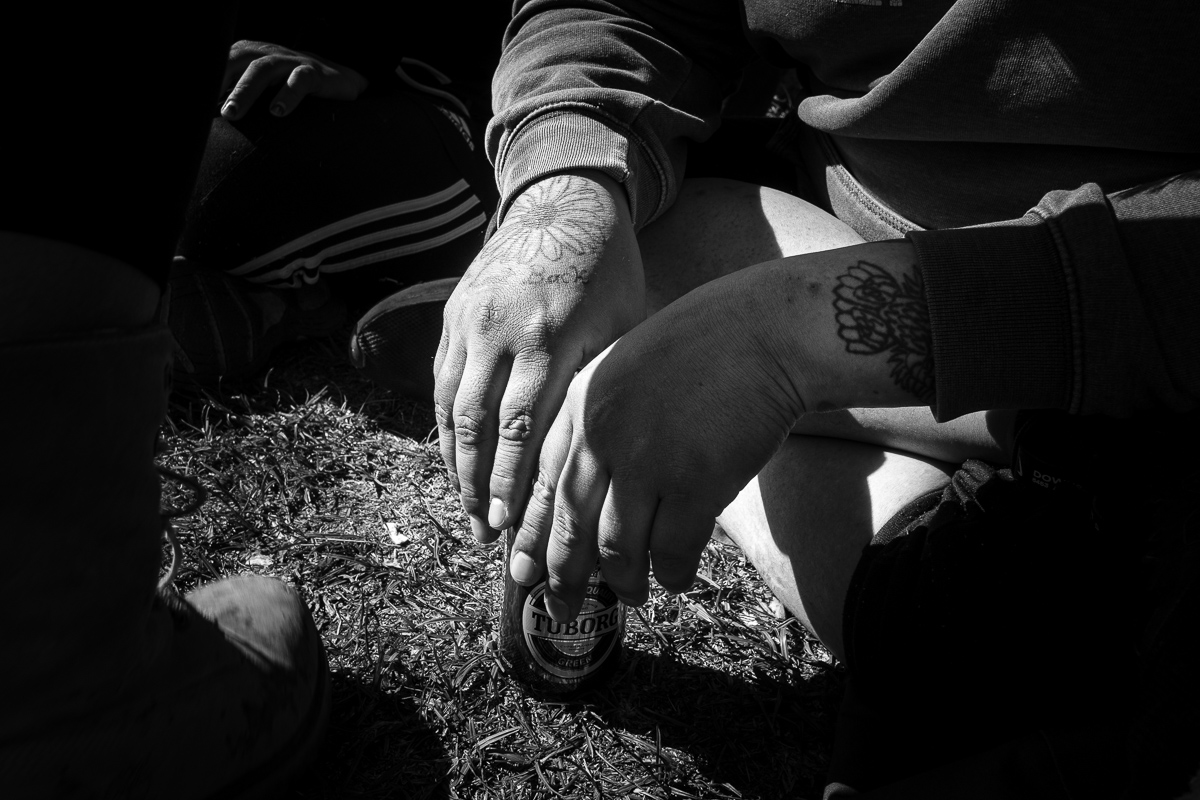
Kasper enjoying a beer on a Saturday afternoon in Tasiilaq. Contrary to the others, he does not want to get drunk, just enjoy a bit. He is studying to become a priest and a guide for his community.
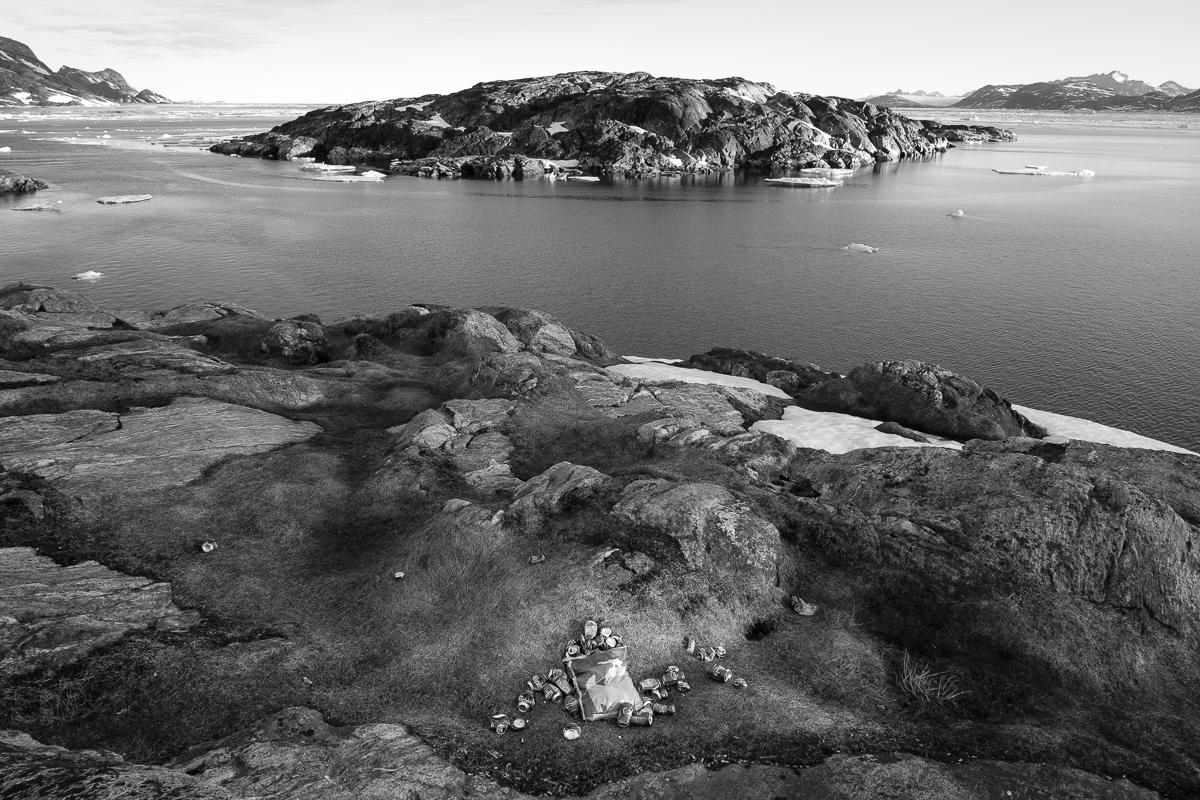
Abandoned beer cans on the hill above Sermiligaaq.
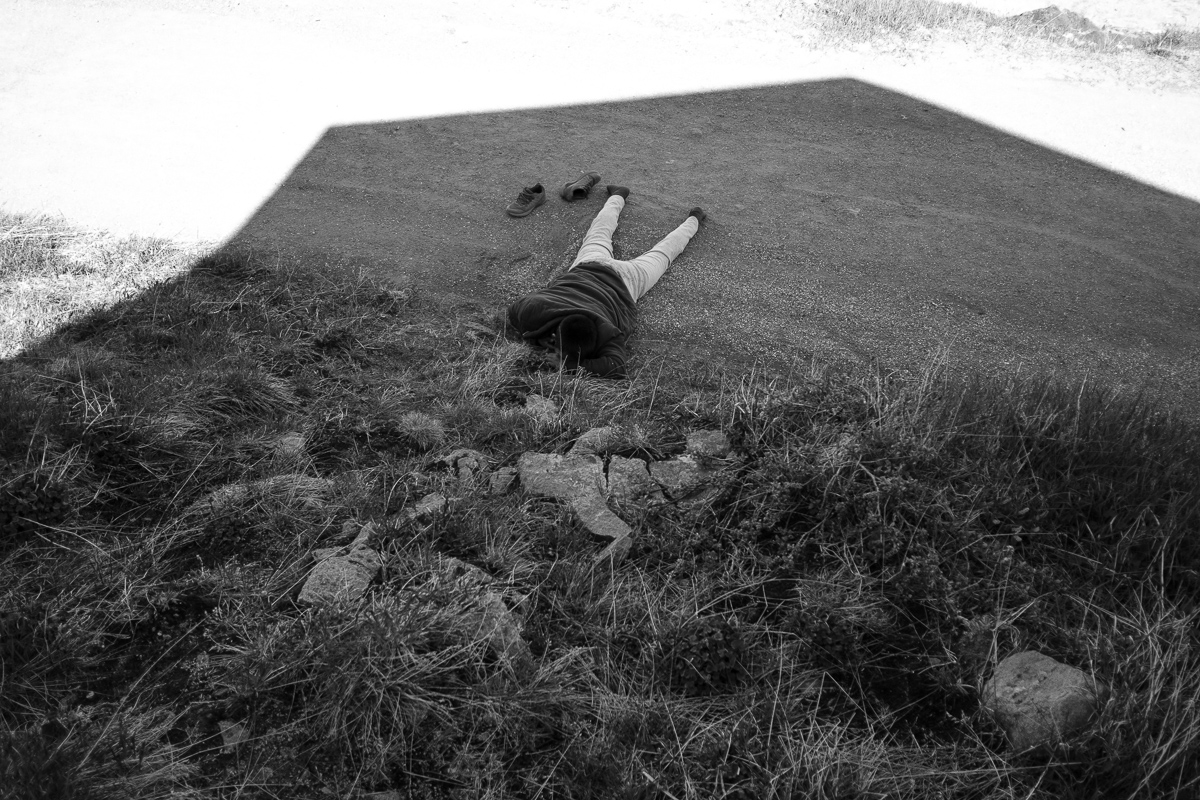
A drunk man sleeping by the side of a road in Tasiilaq, a common sight at the weekend.
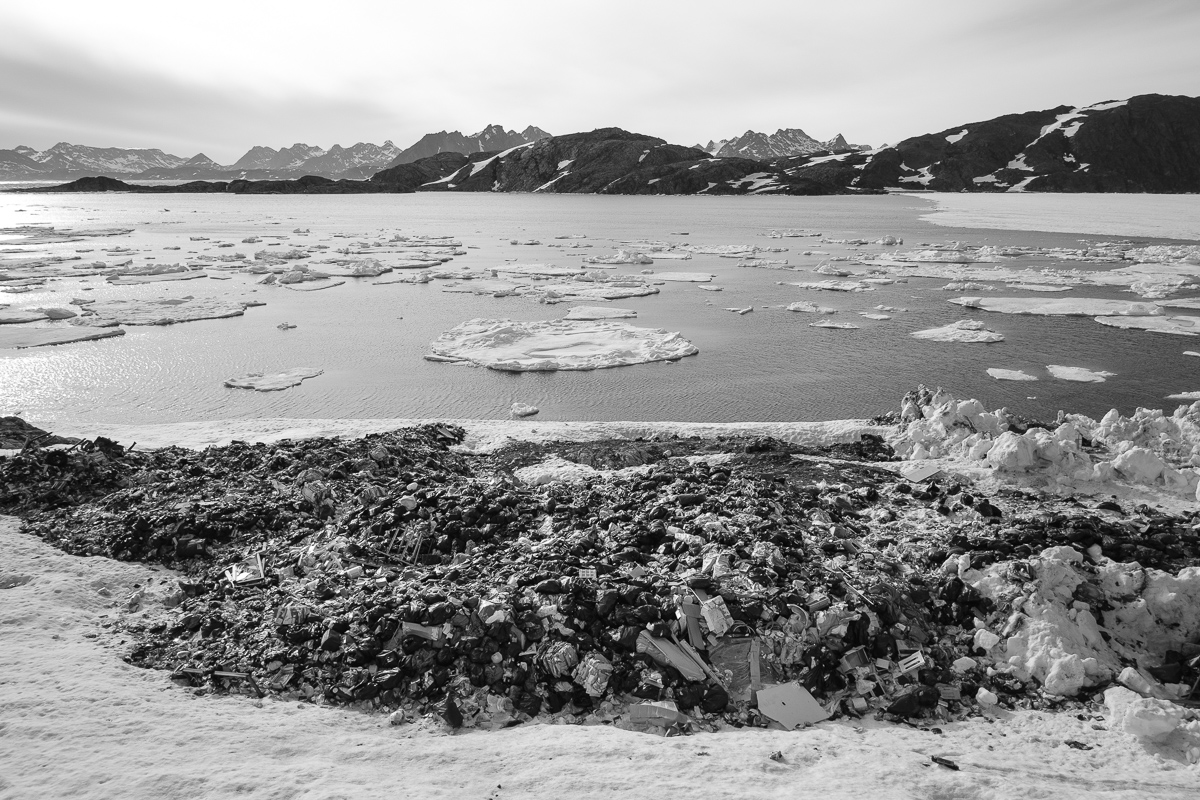
A garbage dumping place in Kulusuk. Garbage is collected by a pulic service and dumped at sites not very fram from the village. It will not go anywhere from there as no pickup service exists. When it is too much, it is simply burned.
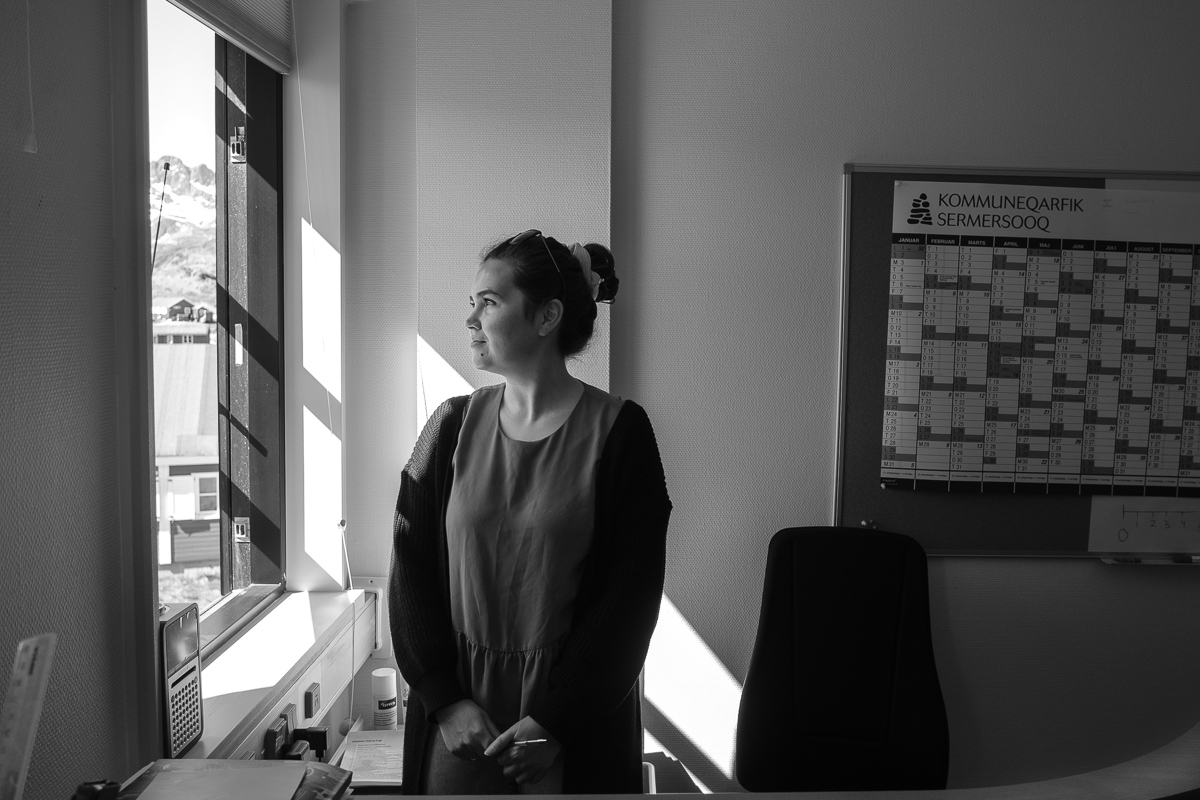
Bola Olsen, responsible for the addiction support programmes in her office in Tasiilaq. Funding is limited and she is the only person working with dependencies in the whole district. Programmes are extremely basic, start only when a victim asks for support and involve flying experts from the west coast.
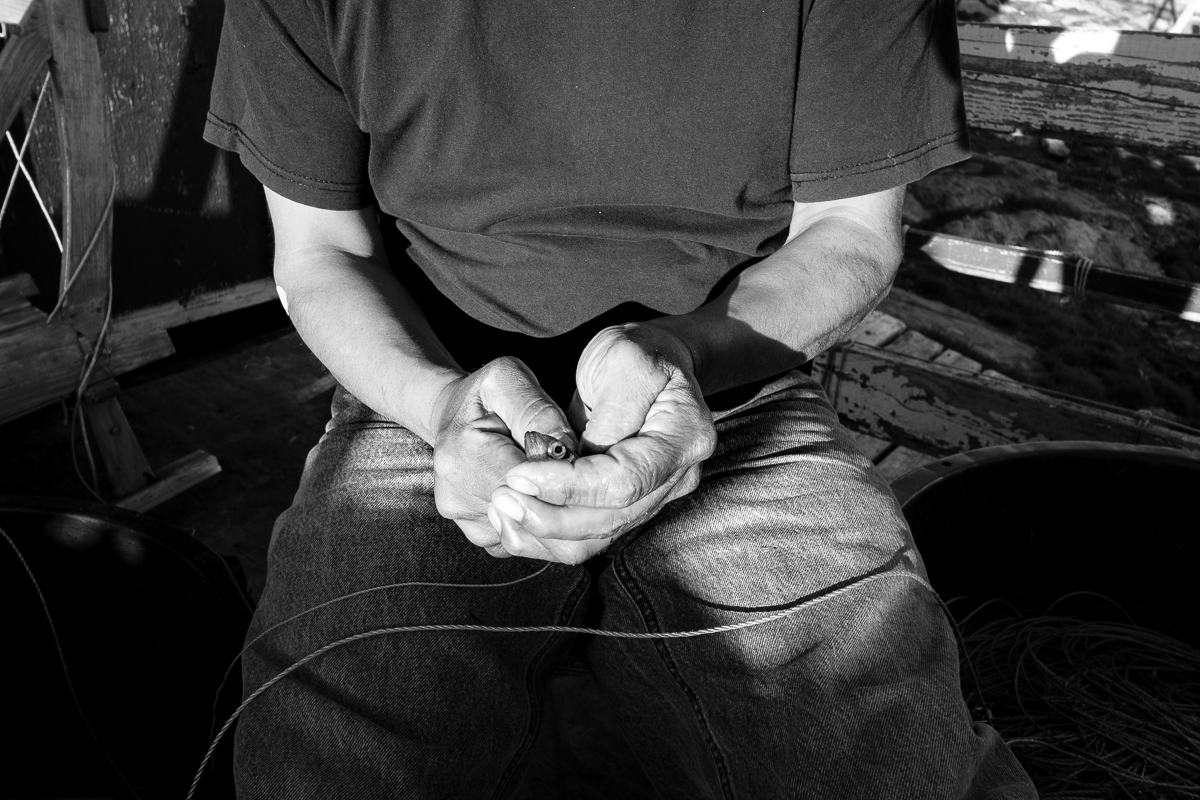
Simujok preparing a 1 km-long trawl line.
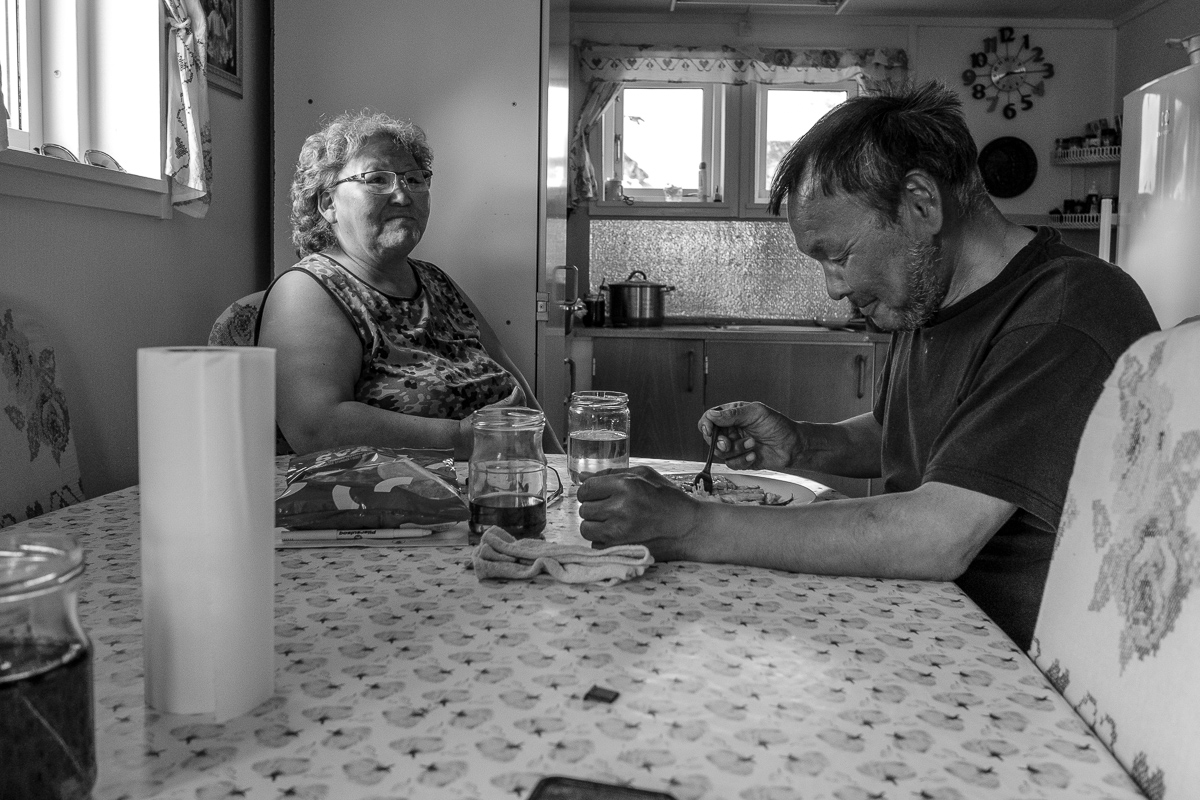
Simujok having lunch in his house in Sermiligaaq with his wife. Family members are very close and it is very common that multiple generation live under the same roof, even in small houses. He lives with his wife, two of his four daughters, the boyfriend of one of them and a grandson.
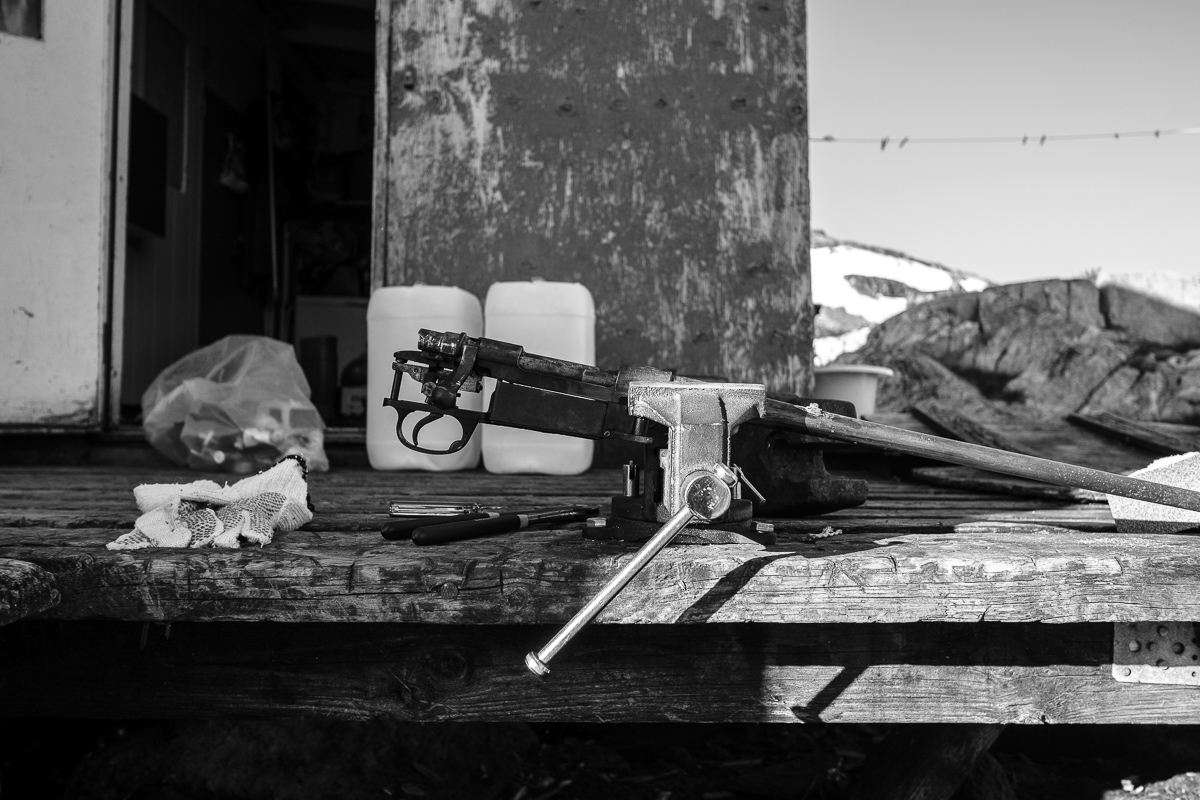
A rifle being repaired. Rifles are extremely widespread in Greenland and used for hunting seals, birds and polar bears.
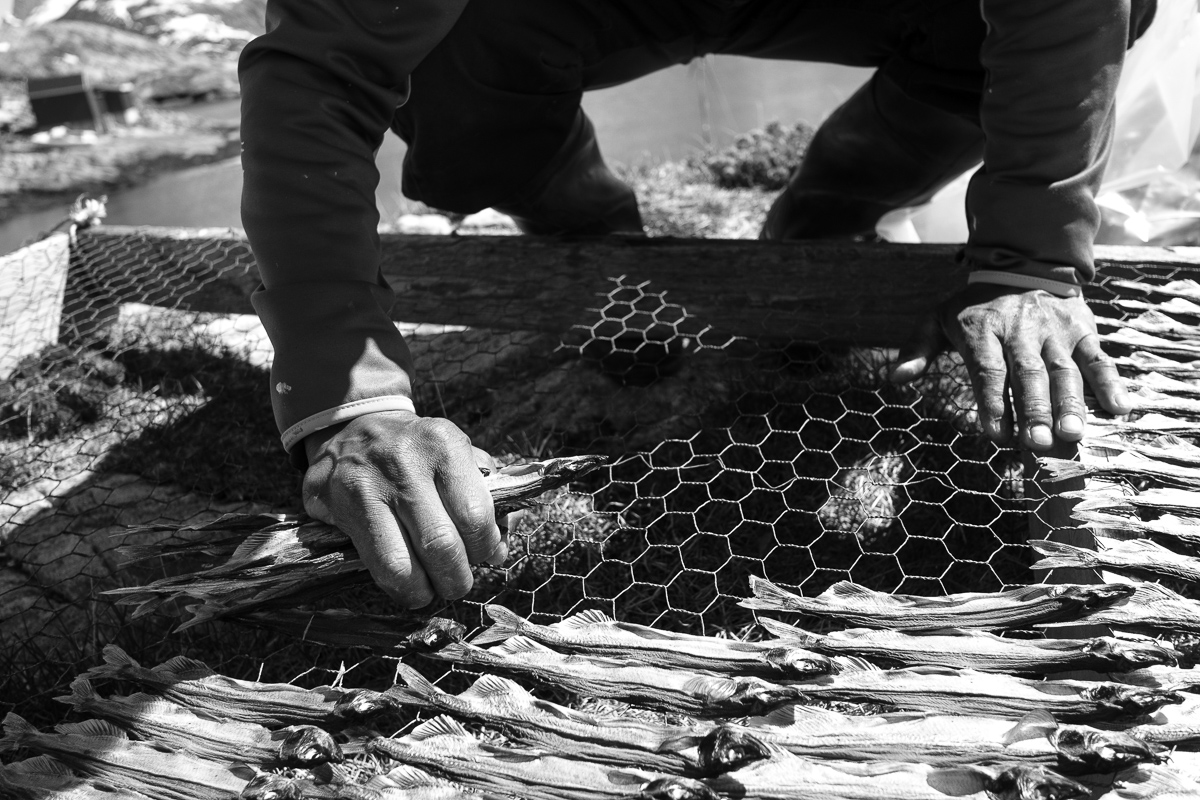
A fisherman collecting sundried ammasset. Dried fish will be then stored for the winter.
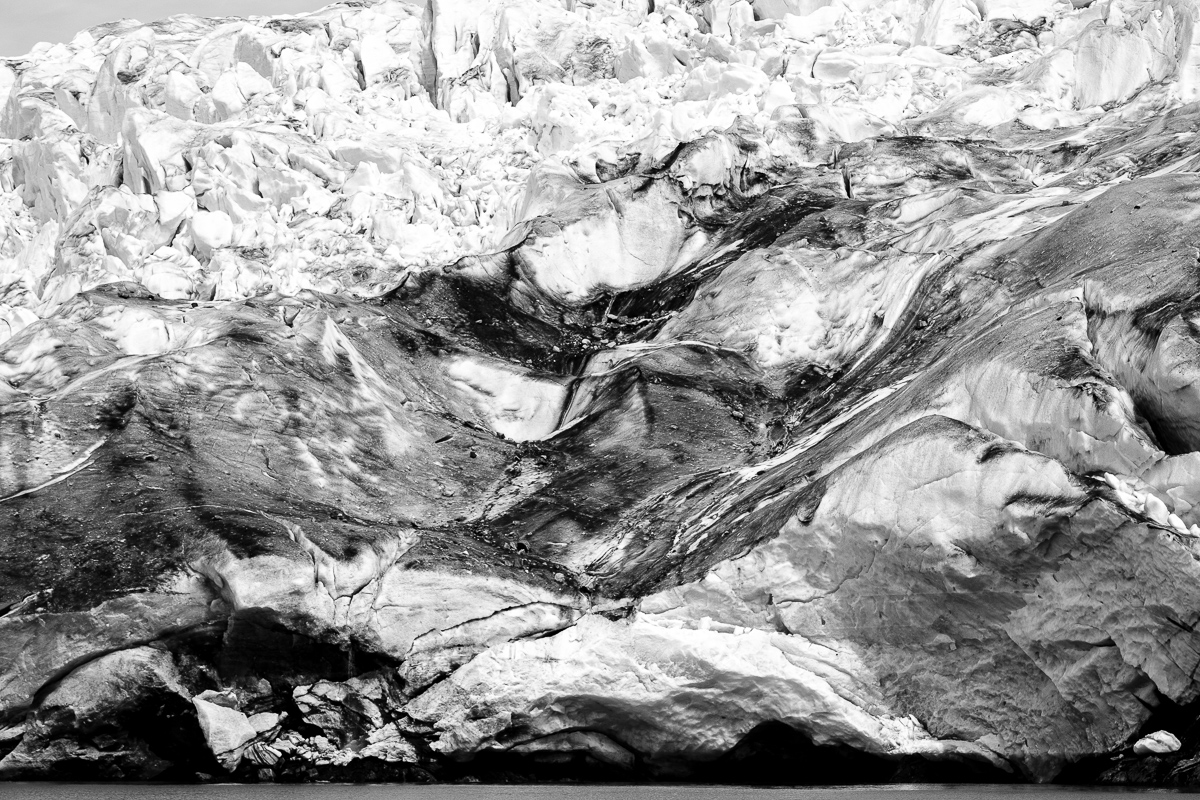
The Knud Rasmussen glacier front. The Arctic is warming four times faster than the rest of the world and glaciers are retreating quite significantly.
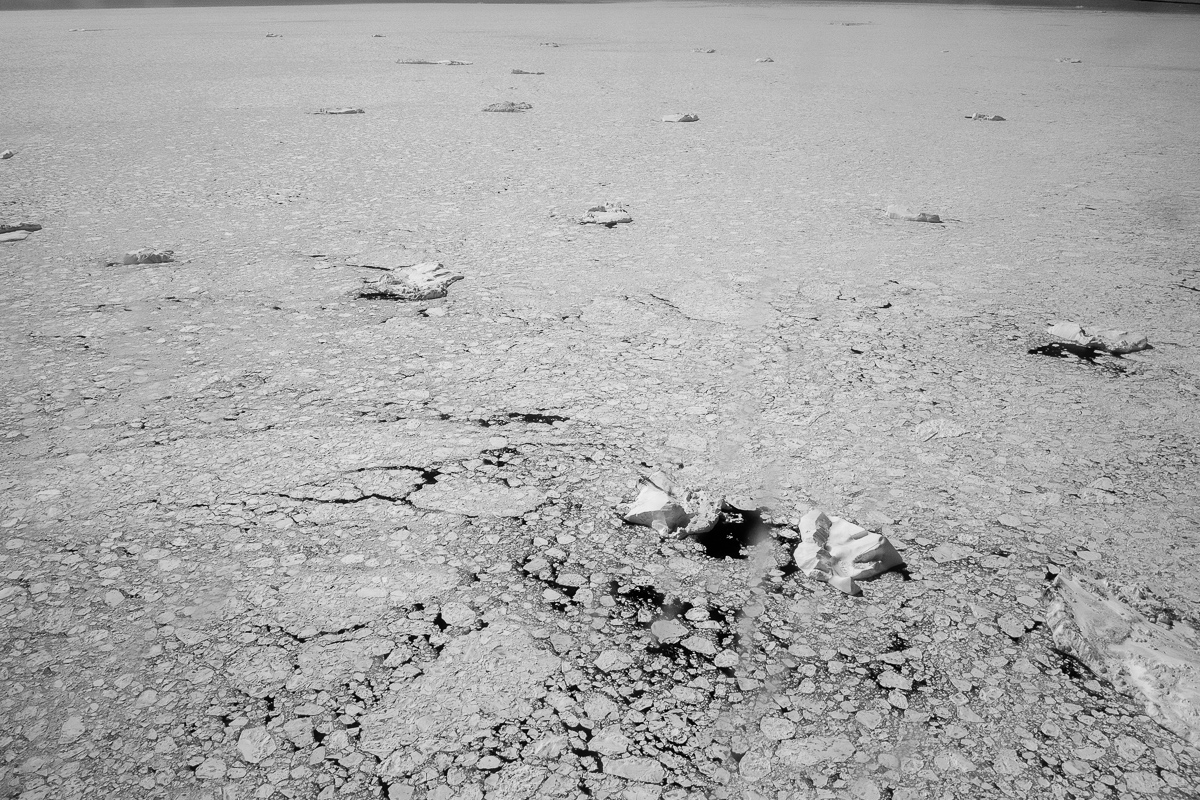
The East Greenland Current (EGC), also called polar-stream, is a cold, low-salinity current that extends from Fram Strait (~80N) to Cape Farewell (~60N) cutting through the Denmark Strait. It makes east Greenland hard to reach by boat and contributes to its isolation. The government Royal Arctic Line cargo, the one supplying supermarkets, can only operate from May to November. For the rest, supplies are transported by plane.
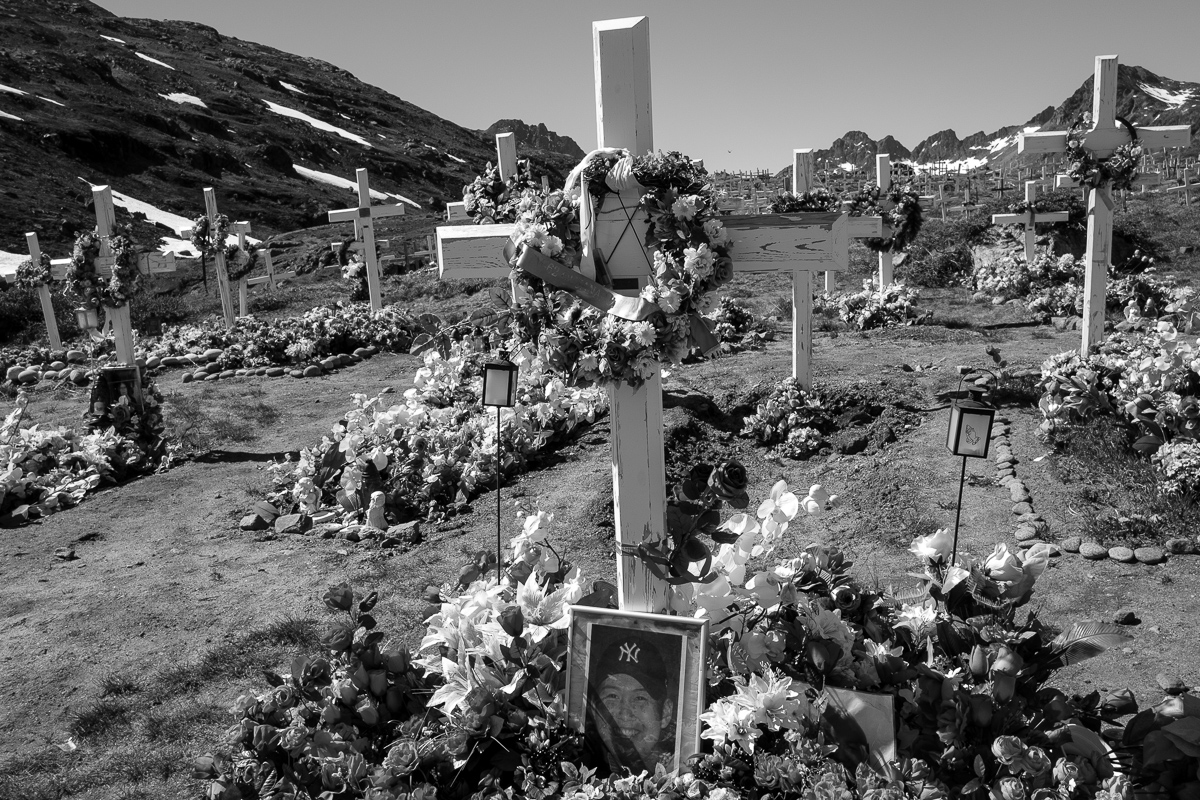
The graveyard in Tasiilaq. Graves of young people who committed suicide are a common sight. Greenland has the world’s highest suicide rate (83 people in 100,000 between 1985 and 2012). Most suicides happen after the end of the educational path, when young people face uncertainty and lack a clear path in front of them. It is a mix of different causes and it is extremely hard to contrast. A help line — Tusaannga or “I hear you” — has been activated years ago. The fact that Greenlandic traditional society “accepts” suicide as a decision as any other, historically to free communities of what was perceived as a burden, does not help.
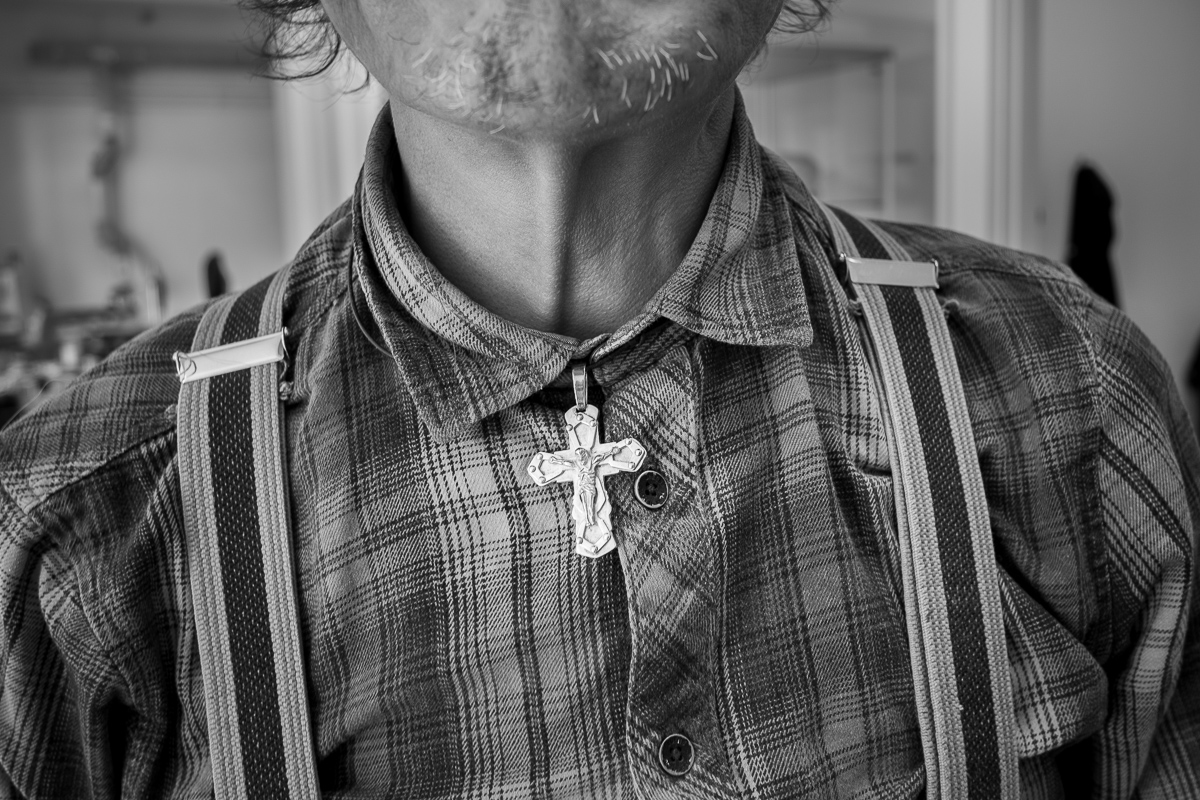
Christian symbols are ubiquitous and worn with pride.
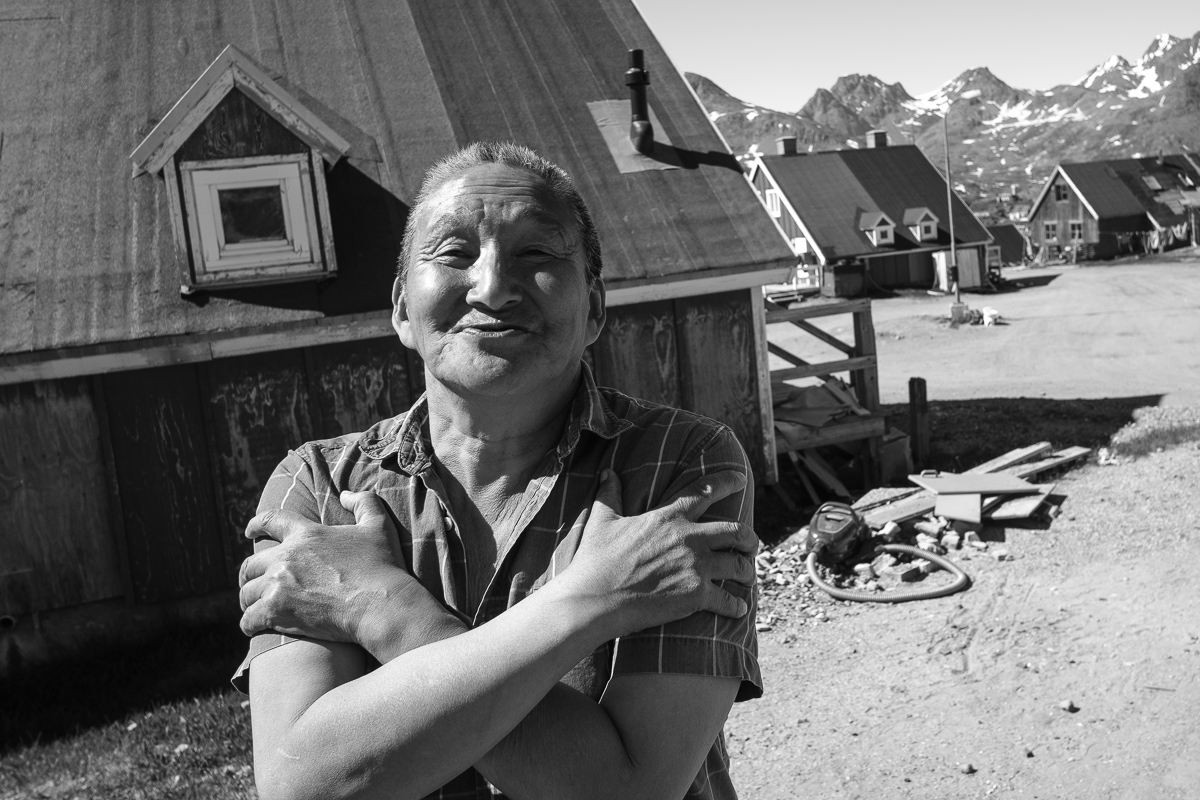
Man in Tasiilaq. Retired, he travelled extensively as captain of cargo ships. He lost his son as he went hiking in the mountains around Nuuk and never came back. An extremely positive person, after all his experiences around the world he decided to come back to his hometown, Tasiilaq.